
Culture

Air Jordan 1 Low OG Banned: From NBA Controversy to Global Sneaker Fame

29 June 2026

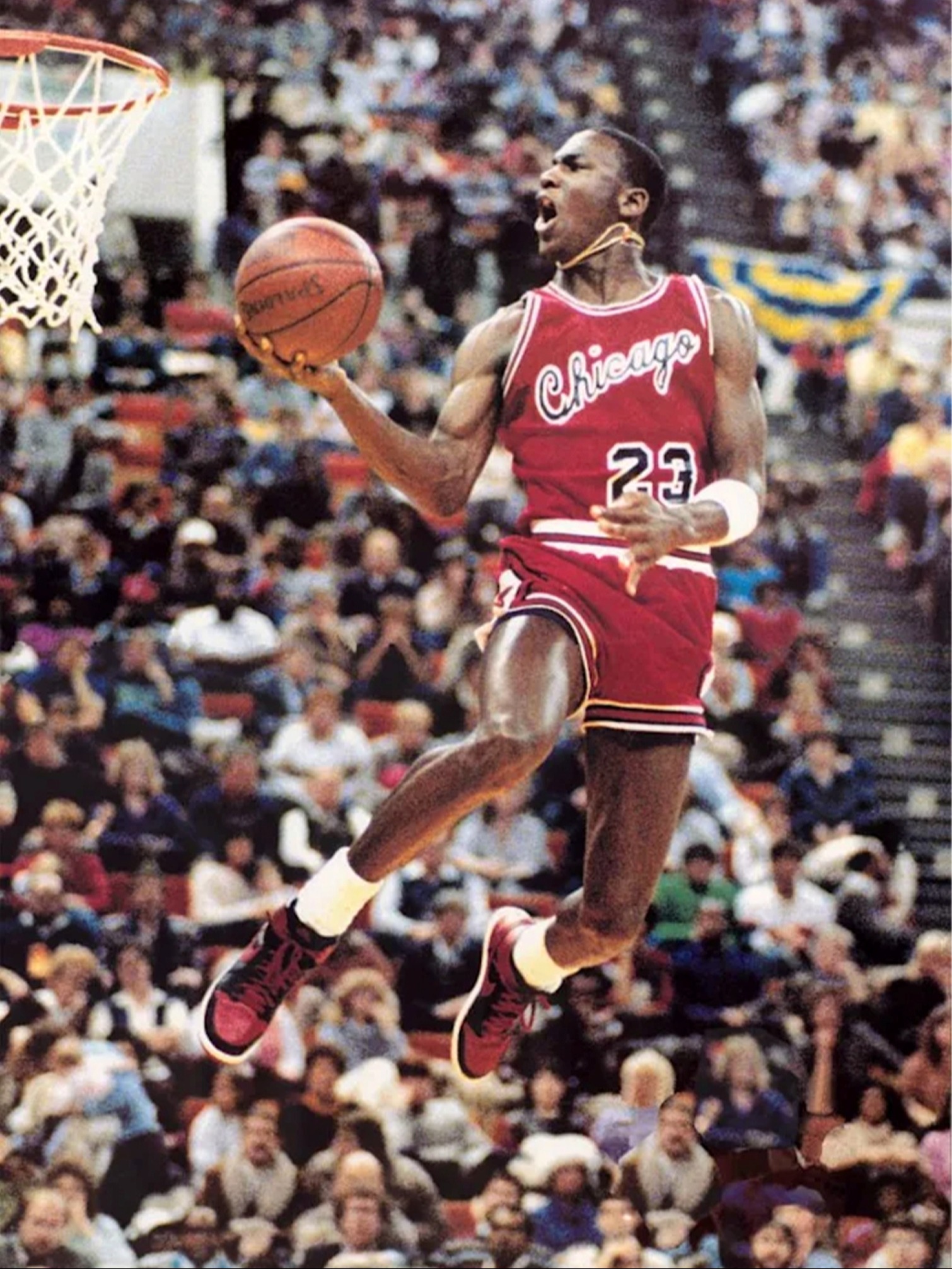
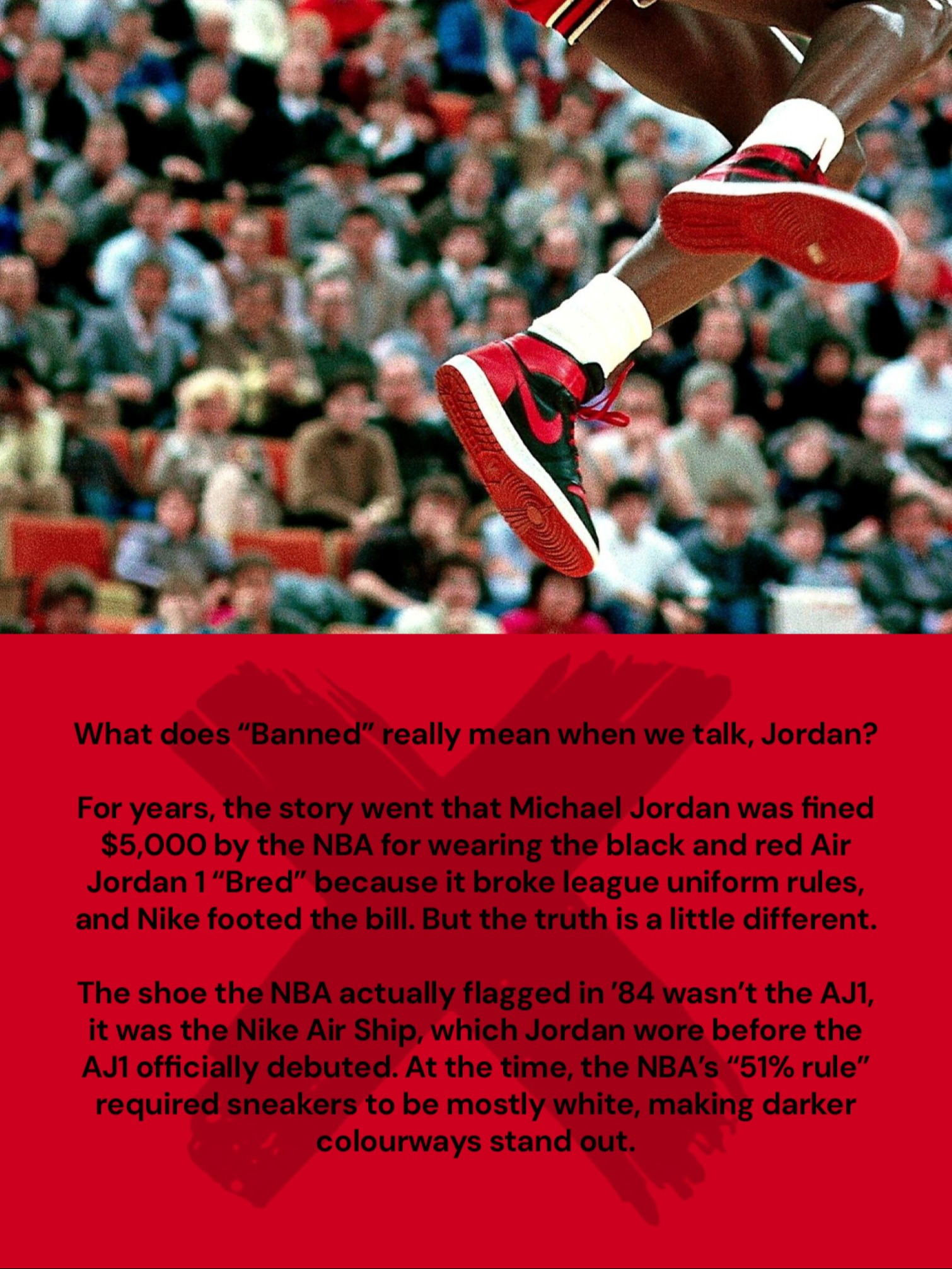
Some shoes carry a story that outlasts the season they were made for. The Air Jordan 1 Low Banned colourway is one of those. The black and varsity red combination has been on feet for over four decades, and the reason people still reach for it has less to do with nostalgia and more to do with what the colour story actually represents. It started with a league rule, a fine, and a young player who kept wearing the shoes anyway. In 1984, the NBA enforced a uniform policy requiring players to wear sneakers that were predominantly white and matched their team's colour scheme. Michael Jordan arrived that season wearing a shoe that did not comply. The Nike Air Ship, which Jordan wore during preseason and early regular season games before the Air Jordan 1 officially debuted, was flagged as a violation of the uniform code. Nike paid the fine each time Jordan wore it, reportedly five thousand dollars per game, and turned the entire situation into one of the most effective advertising narratives in sports history. The stunt is estimated to have cost Nike around one hundred thousand dollars in total. The Air Jordan 1 generated one hundred and twenty six million dollars in its first year of retail. The Air Jordan 1 launched publicly in 1985, and the banned colourway became inseparable from the shoe's identity. The message was clear. This shoe was different enough to be banned, and that was worth knowing about.


Why the Low Silhouette Works for This Colourway

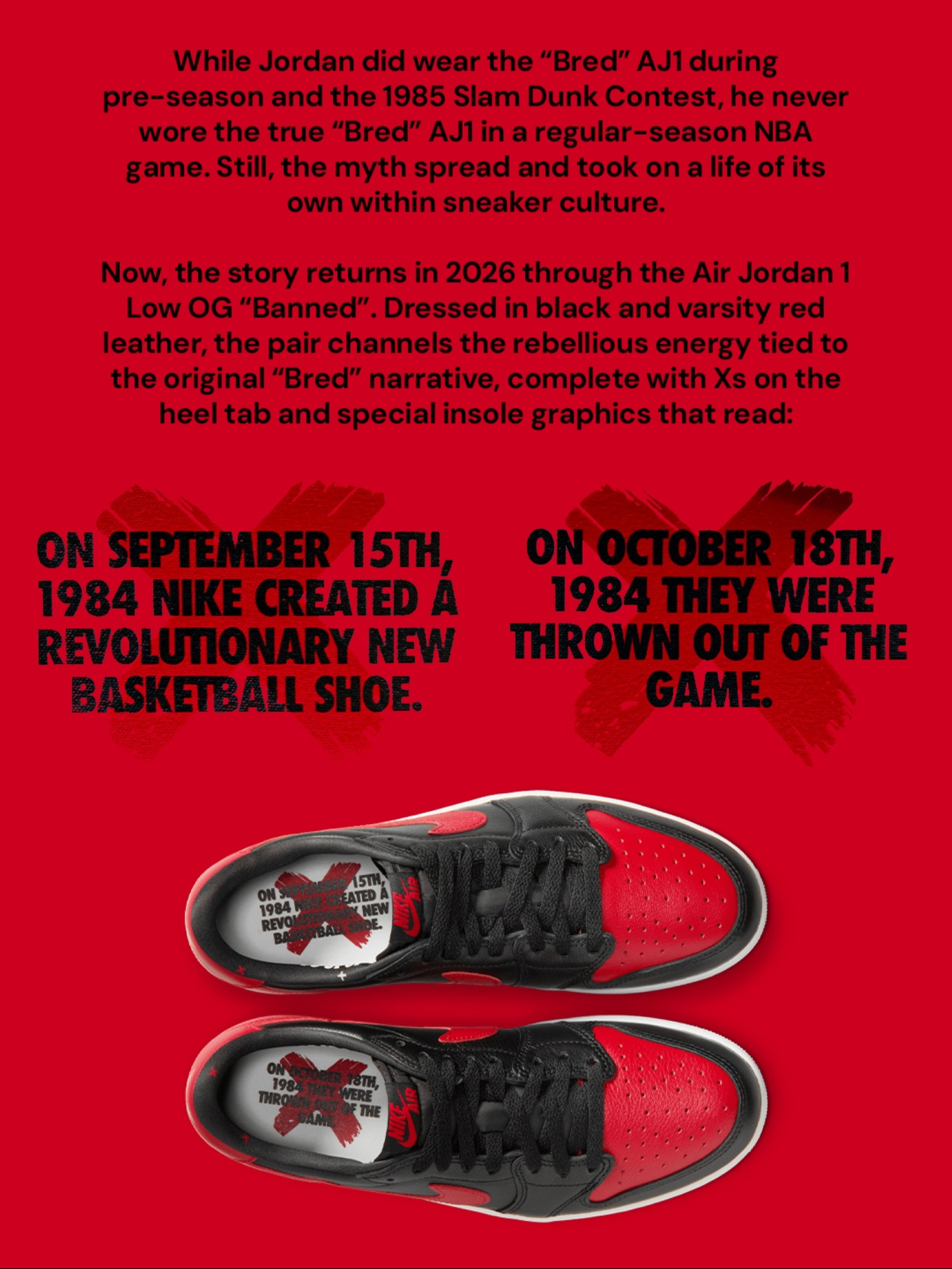
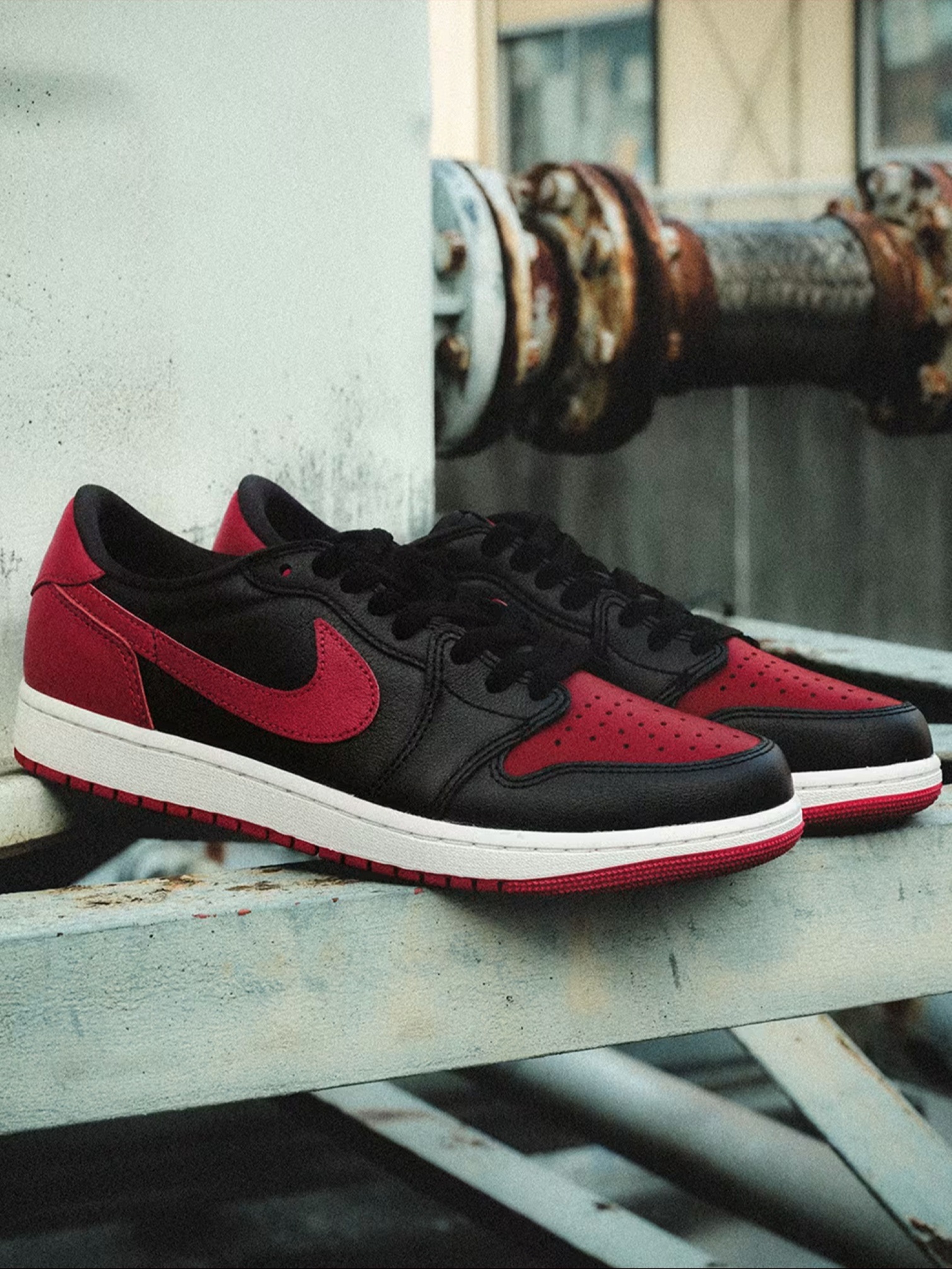
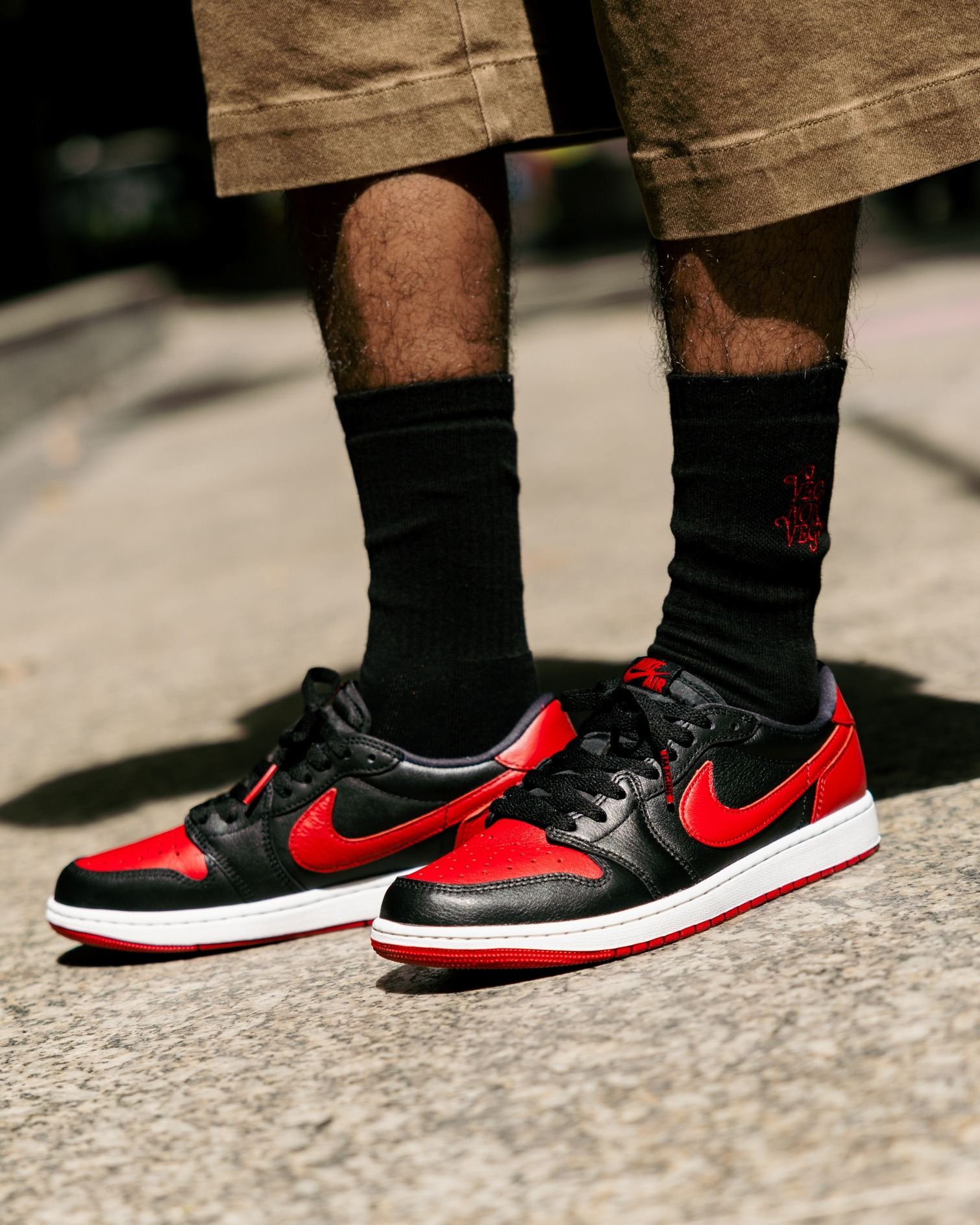
The Air Jordan 1 Retro Low OG Banned carries the black, varsity red, and summit white palette on a low-cut silhouette that reads differently from the high-top version most people associate with the original. The low collar reduces the visual weight of the shoe, which lets the colour blocking carry the look. The varsity red hits across the toe box, heel, and Swoosh, blocked against the black leather upper, with summit white anchoring the midsole and inner lining. On this 2026 retro, a varsity red X replaces the usual Wings logo on the heel, a detail borrowed from the 2011 High Banned release. The insole references October 18, 1984, the date Jordan wore the black and red Air Ship in an NBA game, a detail collectors will notice. Where the high-top Banned colourway can dominate an outfit through sheer proportion, the low sits more quietly. It works with cuffed denim, shorts, or relaxed trousers without requiring the rest of the look to build around it.


SHOP AIR JORDAN 1 RETRO LOW OG BANNED


How the Black and Red Colourway Moved From Court to Street

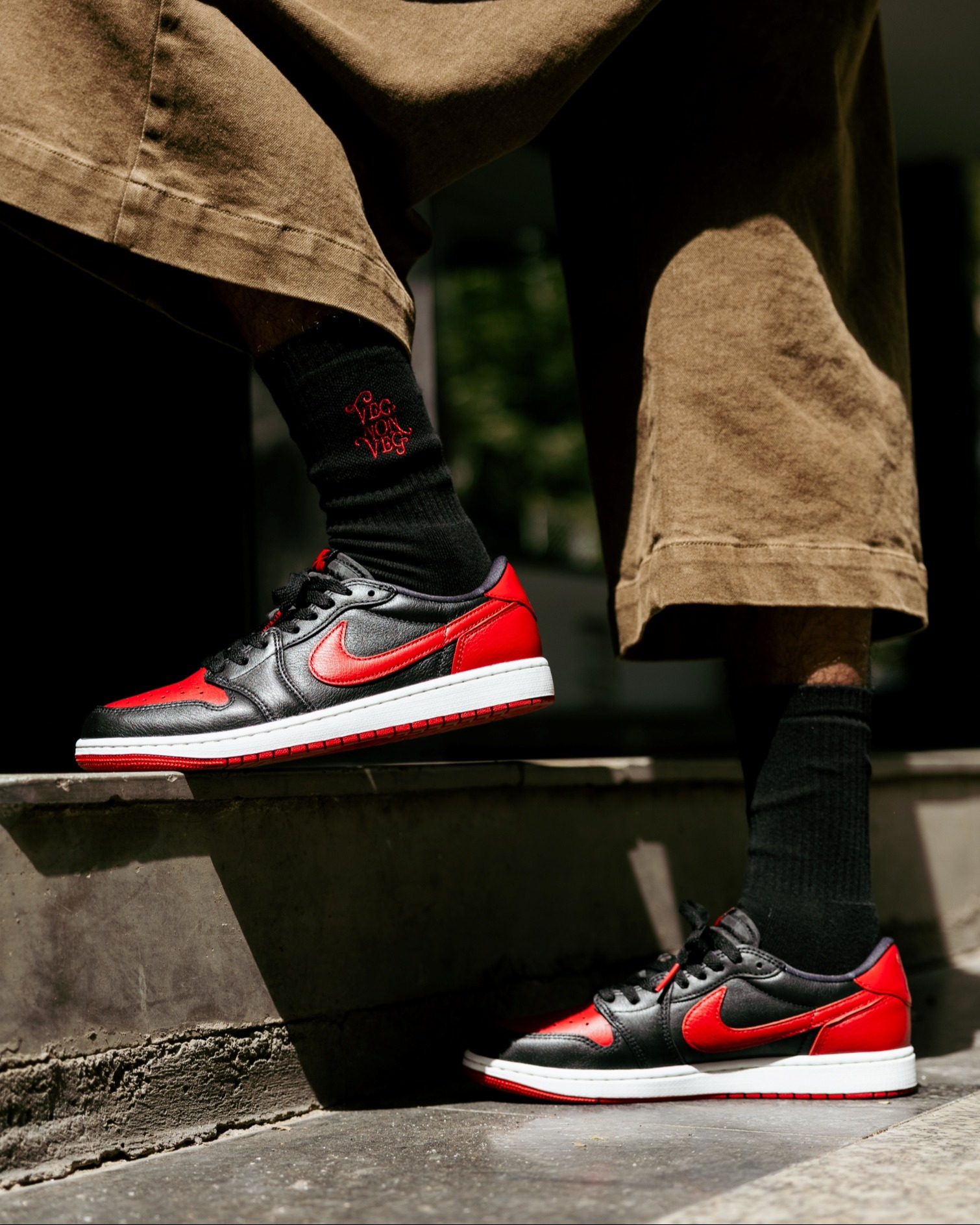
The banned colourway did not stay on basketball courts for long. By the late 1980s, the black and varsity red combination had found its way into hip-hop and streetwear circles in New York and Chicago. Not because of the uniform violation specifically, but because of what it represented. A player who wore what he wanted and a brand that backed him publicly. That translated directly into how the shoe was worn off the court. People were pairing the Air Jordan 1 Low Banned with baggy denim and tracksuits long before sneaker culture had a language to describe what they were doing. Today, the same colourway works just as naturally with wide-leg trousers and a plain black tee. Worn with a full black outfit, the varsity red panels become the only point of colour, and the look sharpens around them. Worn more casually, the shoe ties together any red or dark accent in the outfit without needing to be coordinated with.


What Makes the OG Low Retro Different From Other AJ1 Low Releases

The Air Jordan 1 Low has appeared in dozens of colourways and variations over the years. SE editions, Craft versions, and general market releases all use the same base silhouette. The OG designation on the Air Jordan 1 Retro Low OG Banned signals something more specific. The construction uses premium tumbled black leather rather than the synthetic overlays found in lower price-point AJ1 Low releases. The panelling follows the original 1985 pattern, and the red X on the heel confirms the shoe was produced as a heritage retro with deliberate collector detail built in. For someone building a collection with knowledge of the history, the difference in material quality is noticeable on foot. That is what separates this release from the many other black and red AJ1 Lows in the market, and why the Air Jordan 1 Low Banned release date of May 2, 2026, generated genuine interest well before the shoe hit shelves.


The Pre-School Version: Same Story, Smaller Size

The Jordan Air Jordan 1 Retro Low OG Banned Pre-School brings the same colourway to younger wearers without changing anything about the design. The black leather upper, varsity red Swoosh and toe detailing, and summit white midsole are identical to the adult version. For parents building their children's first introduction to sneaker culture, the story behind the colourway is the kind that gets passed on, and a shoe that carries that much context is rarely just a shoe.


The Air Jordan 1 Low Banned at VegNonVeg

The black and varsity red combination has its own context that exists independently of whatever else is trending. It does not need a seasonal update or a new collaboration to feel current. At VegNonVeg, both the adult and pre-school versions are part of the Jordan Retro collection, sitting within a wider range of AJ1 Low colourways for those looking to own one of the most documented stories in sneaker history.


SHOP AIR JORDAN 1 RETRO LOW OG BANNED